
ICARO
What is the icaro?
In the mysterious Peruvian jungle, the ikaro emerges as a shamanic song that transcends the simple act of singing; it is a powerful vehicle for healing and communication with spirits.
Ícaros are not just melodies; they are musical prayers imbued with the essence of deities, ancestors, and natural elements. These chants, which can be both ancient and newly revealed by spiritual realms, are used during ceremonies, especially with entheogenic substances like ayahuasca, where the shaman enters an altered state of consciousness to connect with invisible forces.
Each shaman carries a personal repertoire of ícaros, a heritage from past teachers and from nature itself.
These songs take various forms: from simple verses that evoke sacred plants and animals to repetitive melodies that seem to arise directly from the divine.
In this context, the act of “icarar” is a manifestation of the healer’s power, charging objects with healing energy that, when administered, can bring cleansing, protection, or healing. The transmission of these ícaros does not occur through formal pedagogical means, but rather through deep experiences of spiritual connection, dreams, and visions that reveal their ancestral wisdom. Despite their lyrical simplicity, the ikaro often has a profound impact, resonating not only in the mind but also in the souls of those who receive it, creating a bridge between the human and the divine in the vast Amazon.

Melodies of Healing and Spiritual Connection
The music and lyrics of the ícaros stem from a profound process of communion with master plants, an art form that shamans develop over years of intense training known as the “diet.”
This practice involves voluntary isolation, in which aspiring shamans immerse themselves in a strict, ritualized diet that allows them to establish a fundamental spiritual connection. During this period, which can last from several months to years, shamans not only restrict their diet to basic elements such as rice and fish but also abstain from any activities that may interfere with their relationship with the plants, creating a nurturing space for the revelation of ancestral wisdom.
At the heart of this tradition, the ícaros emerge as sacred songs that shamans receive as gifts from nature.
The experience of receiving an ícaro is powerful and personal, as described by one shaman: “I could only hear something, as if someone were singing at the back of my head…” Typically, the melody is revealed first, followed by the lyrics, which become ingrained in the shaman’s memory through repetition and recognition. These songs are more than mere melodies; they explain and exemplify healing practices, transformed by the emotional and spiritual connection that shamans have cultivated with their plant teachers.
Additionally, even those who regularly participate in ayahuasca ceremonies without having undergone a diet can experience the spontaneous reception of ícaros, acting as channels for these powerful melodies in moments of need.
Culturally and spiritually, the ícaros are a manifestation of the rich legacy of traditional Amazonian medicine. These songs provide a bridge between the physical and spiritual worlds, serving as tools for emotional, physical, and mental healing. Shared across generations, these songs preserve the cultural and spiritual identity of the Peruvian people, enriching the lives of those who partake in these ceremonies.

Icaros: Resonances of the Beyond
In the heart of the Amazon jungle, where shadows intertwine with golden light, the ícaros emerge as whispers from a hidden world.
They are not mere melodies; they are powerful vehicles of energy that connect the soul with higher dimensions. By entering an altered state of consciousness—whether through ayahuasca, hypnotic drumming, or ritual dances—individuals can transcend the veil of this reality and approach the divine.
These songs, often driven by ancestral spirits, allow shamans to “hollow themselves out,” becoming vibrational conduits. Like a flowing river, the ícaros take shape from the perception of the shaman and the spirits surrounding them, creating a symphony of healing. Their vibrations resonate with the energetic body of those seeking help, allowing the soul to realign in harmony with the plan laid out by the ícaros.
At their essence, these songs are dynamic; they arise spontaneously according to the needs of the moment: they protect, heal, or unveil energies of elemental beings, weaving invisible landscapes in the minds of those who listen.
The effects of an ícaro transcend logic; the sacred singer transforms, leaving behind their ego to resonate with the universe. Each healer is tuned into specific frequencies of this powerful energetic transmission, thus shaping the nature of their healing.
As guardians of the ceremonial space, they use ritual tools: the sound of the chakapa purifies, while the smoky mapacho creates protection against negative energies. As gauges of the soul, the ícaros do not only communicate; they also transform, inviting the listener to release resistances and embrace healing. Now, the key to unlocking the power of the ícaro lies in the openness of the receiver. Resistance can create barriers that obstruct resonance. A simple act of trust in the shaman can be the gateway to profound transformation. Through the vibration of the ícaro and the teachings of ancestral healers, we can come to understand the wonders of the interface between sound and our physical being.
Without the ícaro, ayahuasca is merely a shell; alongside it, it becomes a deep journey towards self-knowledge and healing. In every sacred song, the ícaros reveal not only secrets of the spiritual world but also the forgotten history of our own essence, reminding us that we are a symphony in constant evolution. Immerse yourself in this journey, where the ethereal ícaros await to liberate you, heal you, and connect you with what you have always longed for.

The Power of Icaros in Spiritual Healing
These melodies are powerful tools that facilitate transformative experiences. Below, we will explore their most common uses:
1. Energetic Protection:
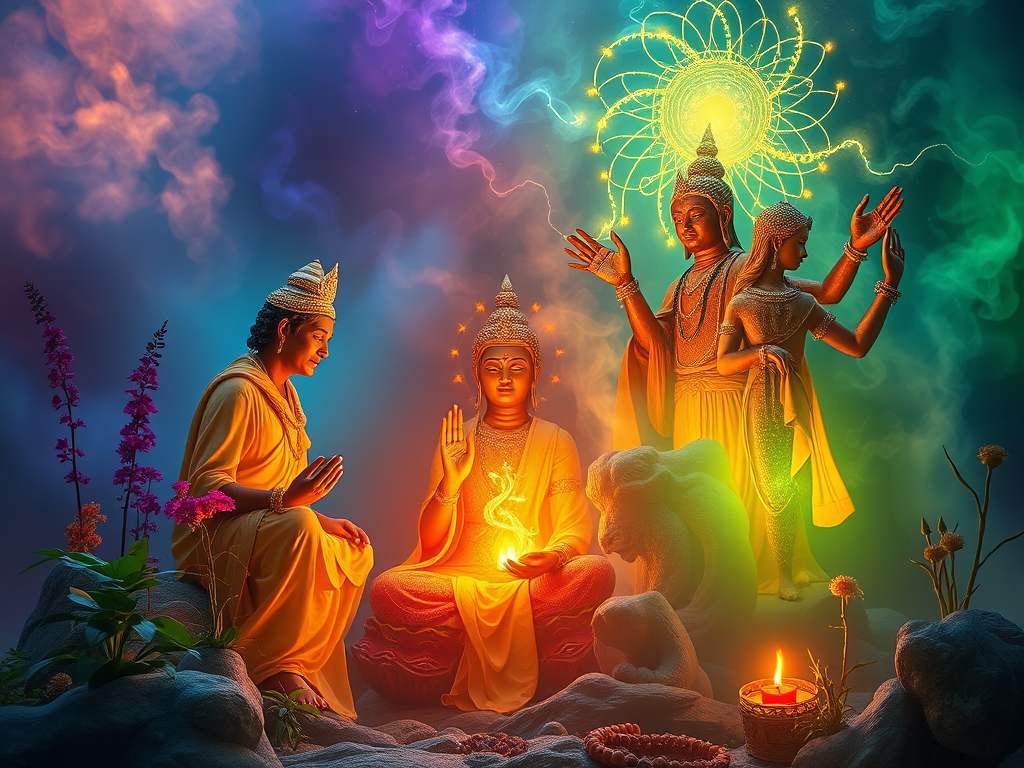
Shamans sing icaros to create a safe and protected space during ceremonies. They invoke spirits of plants and animals that act as guardians, safeguarding all participants from malevolent influences.

2. Induction of Visions:
Icaros also establish a connection between the participant and the spiritual worlds. By doing so, they allow profound visions to flow, which can guide the healing process.

3. Opening Portals:
By invoking the spirits of various entities, shamans open portals to parallel realms and facilitate the transit of souls to places of healing and revelation.

4. Stabilization of Experiences:
During altered states, where visions may become overwhelming, certain icaros help participants navigate and stabilize their experience, ensuring a safe return to full consciousness.

5. Invocation of Spiritual Helpers:
Each song can direct energy toward healing plants, ancestors, or deities, thus reinforcing the healing effect of the ritual.
6. Energetic Cleansing:
Some icaros create an energetic tumult that facilitates the release of stagnant emotions or negative energy, allowing for deep purification to occur.

7. Energy Transfer:
It is possible for one participant to transfer energies to another, which can result in collective healing or the purification of harmful energies.

8. Deep Healing:
These songs focus on restoring the mind-body-spirit balance, providing love, emotional release, and specific healing of organs or aspects of the self.

9. Defense Against Spells:
In situations of witchcraft, shamans invoke protective forces to repel adverse influences, using powerful icaros charged with defensive energy.

10. Positive Manipulation:
There are icaros that allow for influence over negative behavioral patterns, promoting positive changes when used with good intentions.

These sacred melodies enrich shamanic ceremonies, making icaros an essential element in spiritual and emotional healing, each with a specific purpose and a deep connection to ancestral traditions. As they take shape through the shaman’s voice, icaros become bridges between the physical and the spiritual, guiding participants toward health and clarity.
Common Types of Icaros
– **Warmikara:** To attract love and emotional connection.
– **Shitana:** To counteract spells.
– **Manchari:** To eliminate fear.
– **Arkana:** Protection against negative energies.
Through these songs, the shaman not only guides the participants but also weaves a fabric of healing that encompasses all dimensions of being. The vibrations of the icaros endure, resonating in the soul and liberating what is wounded, reminding us of the ever-present potential for transformation in every ceremony.
It is important to remember that the meaning or intellectual understanding of the words of the ikaro are not necessarily important; what matters is the vibration that it transmits. Studies by Japanese doctor Masaru Emoto have demonstrated the power of sound in water. If we recall that 70% of our body is water and that ayahuasca is a liquid, we can see that for thousands of years, Amazonian healers have known the healing power of sound, which, in combination with ayahuasca, can accomplish what most people call miracles. Sound can change and modify the cells of the body and have a significant impact on our healing. If you don’t believe me, read Masaru Emoto’s book: “The Hidden Messages in Water.” Ayahuasca alone cannot perform miracles; there are many other factors and circumstances surrounding this medicine that the Western mind must understand. Ayahuasca without ikaro is like a silent singer, like an empty eggshell.
-Love and gratitude.-
Naysha
Read more
Icaros ~ The Fruit of Dieta ~ Sonic Invocations for Guardianship, Connection and Healing
 retreatscalendar.com